Why Spas and Hot Tubs Matter in Green Valley
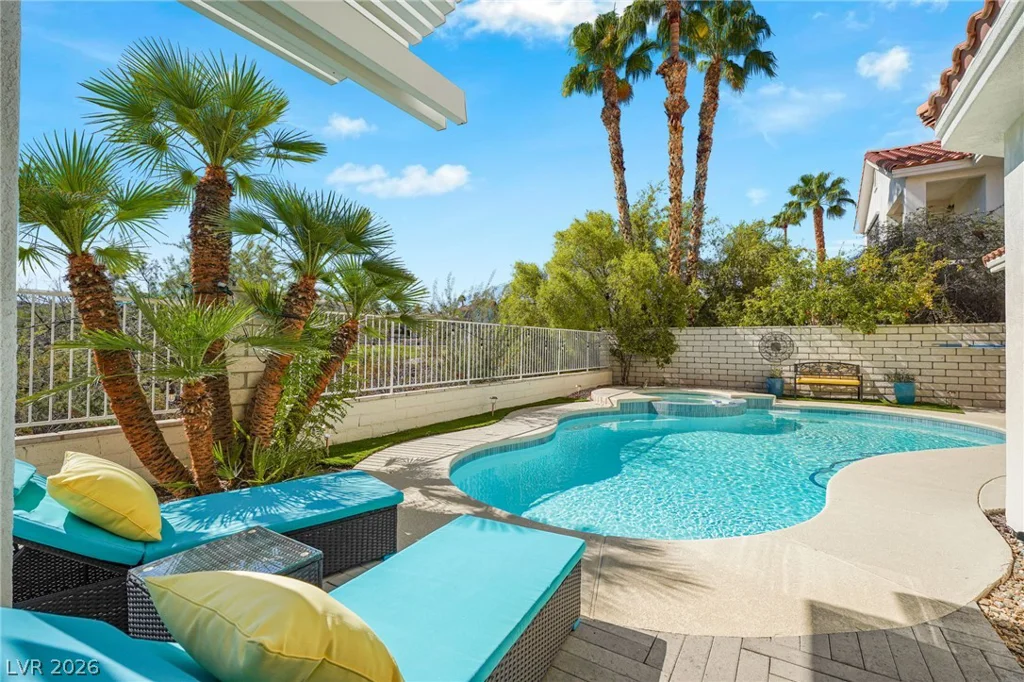
Few features reveal a home’s maintenance history as quickly as a built-in spa, and in a neighborhood where the housing stock dates mostly to the late 1980s and 1990s, that history matters even more. Green Valley’s established blocks near Pecos Rd often pair an in-ground spa with a pool from the original construction, meaning the spa’s heater, plumbing, and shell have likely already gone through at least one major replacement cycle—or are overdue for one. For long-time Henderson residents and move-up buyers who remember soaking under mature palms and shade trees in this part of town, a working spa is part of the appeal of staying in an established community rather than starting over in a newer outlying subdivision. The best spas in Green Valley are the ones where the equipment has been kept current even if the surrounding hardscape shows its age, since a tired pool deck is far cheaper to refresh than a failed spa heater or cracked plumbing manifold.
What to Inspect Before You Make an Offer
- Ask for the age and service history of the spa heater—gas heaters from the 1990s are well past typical lifespan and are a near-certain near-term expense.
- Check whether the spa shares plumbing lines with the pool, and whether any of those lines are the original galvanized steel sometimes used in homes of this era, which corrodes from the inside out.
- Inspect the tile and plaster surfaces around the spa for cracking caused by decades of ground movement, which is more common near homes with large nearby tree roots.
- Confirm the spa’s electrical bonding and GFCI protection meet current code, since older installations were sometimes wired before today’s safety standards existed.
- Look at the equipment pad for rust, mismatched parts, or signs of repeated patch repairs rather than full replacements.
The Most Common Buyer Mistake in Green Valley
Buyers often see a sparkling spa during a staged showing and assume it’s a turnkey feature, without asking when it was last actually used regularly. A spa that’s been drained and refilled just for showings can mask a failing heater or a jet pump on its last cycle. In Green Valley, where many spa installations are original to construction, it’s worth requesting that the seller run the spa through a full heating cycle before closing so problems surface while there’s still time to negotiate repairs.
Resale Perspective & Market Reality
A spa in good working order can be a meaningful selling point in Green Valley, particularly for buyers comparing this established area against Green Valley homes with covered patios that offer similar backyard lifestyle value. However, a spa with visibly deferred maintenance can actually extend a listing’s time on market, because savvy local buyers recognize the cost of equipment replacement and will either negotiate hard or pass on the home entirely in favor of one with updated systems.
Local Cost Context
Replacing a spa heater in Henderson typically costs in the low thousands, while a full spa resurfacing with new tile and plaster can run considerably higher depending on size and finish quality. Buyers should weigh these potential costs against Green Valley’s overall affordability advantage—HOA dues here remain comparatively modest compared to newer Henderson master-plans, and the architectural review process for pool and spa equipment upgrades tends to be less burdensome than in communities with stricter design committees, which can offset some of the equipment replacement costs over time.
Frequently Asked Questions
Can an old spa heater be retrofitted instead of fully replaced?
In most cases no—heaters from the 1990s use refrigerant or components that are no longer manufactured, so a full unit swap is typically required, though the existing gas line and electrical conduit can often be reused, which helps control labor costs.
Does Green Valley’s HOA require approval for spa equipment replacement?
Most Green Valley HOAs allow like-for-like equipment replacement without a formal architectural review, though any visible change to equipment screening, fencing, or the spa’s footprint typically does require notice to the association, and the process tends to be quicker here than in newer master-plans with stricter ARC oversight.