Why Community Pools Matter in Spanish Trail
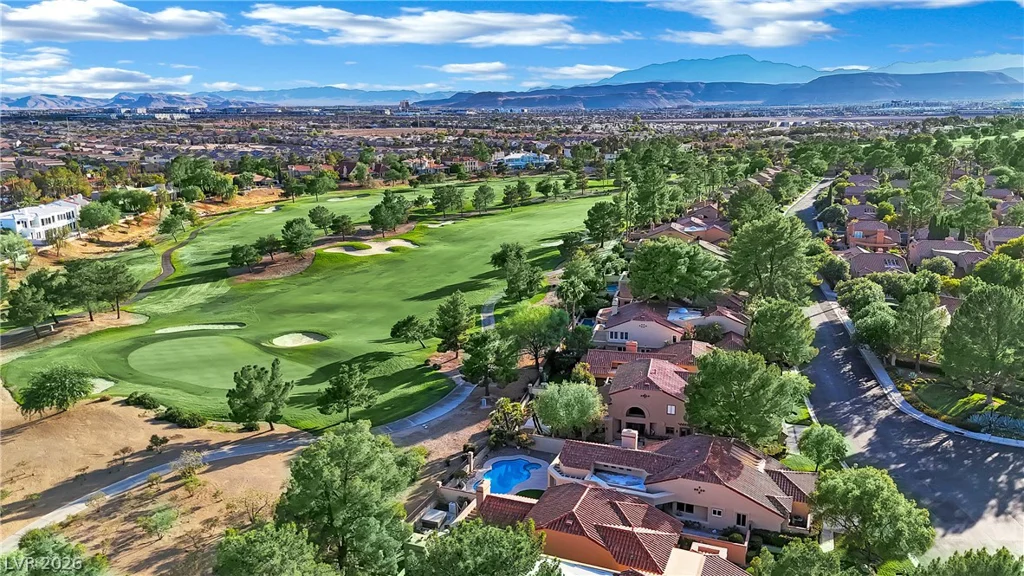
Spanish Trail’s guard-gated sections were platted in the 1980s with a country-club layout in mind, and several pocket neighborhoods built shared pool and spa facilities as part of that original amenity package rather than relying solely on private backyards. For empty-nesters who no longer want the upkeep of their own pool equipment but still want water access on a hot afternoon, a recreation area tucked a short golf-cart ride from the casitas along the North or South nine can be the deciding factor between two otherwise similar listings. Strip-commute professionals also lean on these amenities, since a quick lap before heading down Russell Rd to I-15 beats maintaining a backyard pool that sits unused most weekdays. Because these shared facilities were built decades ago, their condition varies block by block, and the HOA’s reinvestment schedule for resurfacing, decking, and fencing should factor directly into how you value any home that leans on this amenity as a selling point.
What to Inspect Before You Make an Offer
- Confirm the home’s proximity and walking route to the nearest community pool, since some 1980s cul-de-sac layouts require a longer loop around block walls than maps suggest
- Ask the HOA for the most recent reserve study to see when the shared pool, spa, and cabana structures were last resurfaced or re-plastered
- Have an electrician check the home’s original panel, since many Spanish Trail houses from this era still carry 100-150 amp service that may need upgrading for modern HVAC or EV charging
- Inspect the roof tile and underlayment, as original 1980s tile roofs are now reaching the age where the underlayment beneath the tile needs replacement even if the tile itself looks fine
- Check whether the home’s own plumbing main and shutoff valves have been updated, since original galvanized or early copper runs in homes of this vintage are a common source of slow leaks
The Most Common Buyer Mistake in Spanish Trail
Buyers frequently assume that because a listing says “near community pool,” the pool is within easy walking distance and open year-round. In practice, several of Spanish Trail’s shared recreation areas serve specific sub-pods of the community, and a home on the far side of a green belt or wash may technically be “in the community” but a five-minute drive from the nearest gate-accessible pool. Some buyers tour a home, love the floor plan, and only discover after closing that the pool they pictured using belongs to a different HOA sub-association with its own access card system. Always confirm which specific pool facility a given address is entitled to use, and walk the actual route before assuming convenience.
Resale Perspective & Market Reality
Homes within a genuinely short walk of a well-maintained shared pool tend to move faster among the empty-nester segment, who often prioritize lock-and-leave convenience over private pool maintenance. For Strip-commute buyers, the calculus is different — they’re usually comparing this amenity against a private pool option like the listings found among Spanish Trail Homes with Private Pools, and the decision often comes down to whether they want maintenance responsibility or shared access. Days-on-market data for Spanish Trail tends to favor homes where the marketing materials accurately represent walking distance to amenities; overstated proximity claims lead to second showings that don’t convert.
Local Cost Context
Guard-gate and community amenity fees in Spanish Trail run higher than in non-gated southwest valley subdivisions, reflecting the cost of 24-hour gate staffing plus the upkeep of shared recreation facilities, common-area landscaping along the golf frontage, and the perimeter walls that define the community’s lower-density character. Buyers should budget for these monthly dues separately from any private pool costs, and should also factor in the HOA’s architectural review process — exterior changes, including pool equipment visible from common areas, typically require submittal and approval before work begins, which can add weeks to a planned renovation timeline.
Frequently Asked Questions
Does the Spanish Trail HOA require a separate access card for community pools, and what happens if a buyer loses one at closing?
Most Spanish Trail sub-associations issue RFID cards or fobs tied to the property rather than the owner, but replacement and reprogramming fees are typically charged to the new owner if the prior owner’s card isn’t surrendered at closing — escrow should request this item specifically from the seller.
Are shared pool areas in Spanish Trail covered by the master HOA insurance, or does each sub-pod carry its own policy?
It depends on which sub-association the address falls under; some pool cabanas are covered under a master policy while others are insured separately by a sub-HOA, so buyers should request the specific certificate of insurance for the pool facility tied to their address rather than assuming master coverage applies.