Why Dens and Offices Matter in Spanish Trail
Remote and hybrid work has changed what Strip-commute professionals look for in a Spanish Trail floor plan, and many of the community’s original 1980s designs happen to include a den or flex room near the entry — originally intended as a formal living room or study separate from the family’s main living area. That separation, built in decades before “home office” was a real estate buzzword, often makes these rooms better suited to video calls and focused work than a bedroom converted on the fly, since they typically have their own door and sit away from the bedroom wing. For empty-nesters, the same room might serve as a hobby space, library, or guest sitting room rather than an office, but the structural separation that makes it work for remote work also makes it flexible for whatever stage of life the buyer is in.
What to Inspect Before You Make an Offer
- Check whether the den has a solid door rather than the open archway sometimes used in 1980s formal living room designs, since a true office benefits from being closable for calls and privacy
- Assess natural light and window placement, as some original den layouts in Spanish Trail face interior courtyards with limited direct light
- Ask about internet infrastructure, since original construction predates structured wiring and a den at the front of the home may be far from where internet service enters the house
- Inspect flooring transitions and lighting circuits if the room has been repurposed multiple times over the decades, as ad hoc electrical additions are common in long-owned homes
- Confirm whether the room could function as a non-conforming bedroom if needed for resale flexibility, checking closet space and egress window requirements
The Most Common Buyer Mistake in Spanish Trail
Buyers often assume any extra room with a door qualifies as a functional home office without considering acoustic privacy or its position relative to the rest of the home. A den positioned directly off a busy entry hallway, or one that shares a thin original-construction wall with a garage or laundry area, can be noisier than expected for video calls. Walk the room during a tour with an ear toward what sounds carry in from adjacent spaces, particularly in homes where the den sits near the garage entry or kitchen.
Resale Perspective & Market Reality
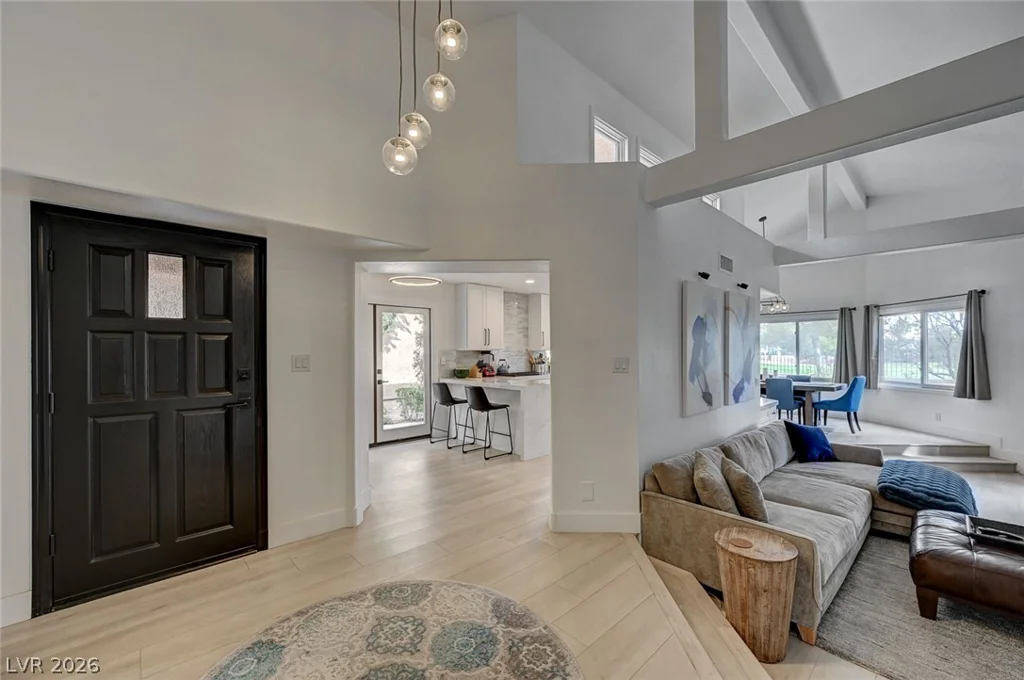
A genuinely separate den or office continues to be a selling point for Spanish Trail’s Strip-commute professional buyers who work remotely at least part of the week, and homes that market this room clearly as a private office rather than a generic “flex space” tend to resonate with that segment. Buyers evaluating overall room flexibility often also look at Spanish Trail Homes with Vaulted Ceilings when comparing how different floor plans allocate volume and separation between rooms, and at Spanish Trail Homes with Community Pools when the overall lifestyle balance between work-from-home space and shared amenities factors into the decision.
Local Cost Context
Converting a den into a more functional office sometimes involves adding data wiring, additional electrical circuits, or improved lighting, costs that are modest compared to structural projects but worth budgeting for in a home where the den’s infrastructure hasn’t been updated since the 1980s. Any exterior changes related to such a conversion, such as adding a window for light, would require HOA architectural approval under Spanish Trail’s established design standards, and guard-gate dues remain constant regardless of interior room usage.
Frequently Asked Questions
Can a den in a Spanish Trail home be legally converted to a bedroom for resale purposes?
It depends on whether the room meets egress window and closet requirements under current code; some original den layouts in Spanish Trail lack a qualifying window, so buyers interested in this conversion should have a contractor confirm code compliance before counting on the added bedroom for appraisal purposes.
Do Spanish Trail’s older homes typically have adequate electrical capacity for a home office with multiple monitors and equipment?
Original 1980s panels were sized for the appliance loads of that era and can sometimes be marginal when a den is outfitted with modern computer equipment, additional monitors, and charging devices, so an electrician’s assessment of available capacity is worthwhile before setting up a permanent home office.