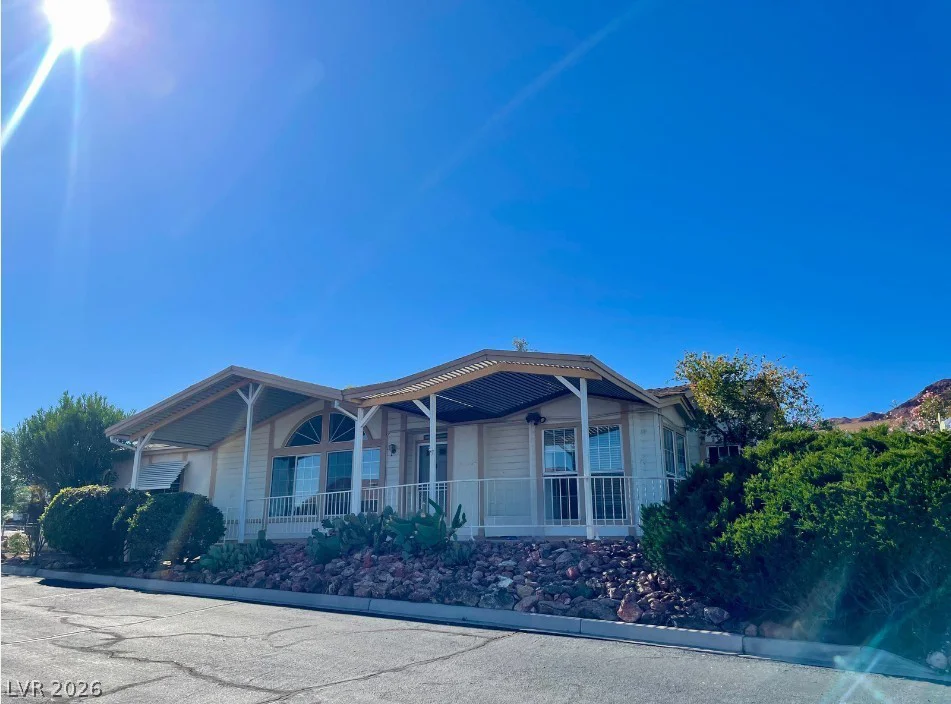
Why Community Pools Matter in Boulder City
Not every retiree who moves to Boulder City for its quieter pace wants to give up pool access entirely — they just don’t want to be the one cleaning the filter. That’s the niche the roughly 25 community-pool listings here fill, mostly concentrated in the handful of planned developments built later than Boulder City’s historic core, where shared amenities make more sense than on the smaller, older lots near downtown. For buyers coming from larger HOA communities elsewhere in the valley, these Boulder City options often feel modest by comparison — smaller pools, fewer amenities bundled in, and HOA fees that reflect a much smaller pool of homes sharing the cost. That’s not necessarily a downside for buyers prioritizing simplicity over resort-style amenities, but it does mean the value proposition of “community pool” here needs to be evaluated against what’s actually included, not against the larger master-planned community standard buyers may be used to from Summerlin or Henderson.
What to Inspect Before You Make an Offer
- Current HOA dues and a recent reserve study, since smaller associations common in Boulder City’s planned developments can face larger per-household cost increases when a pool needs resurfacing or equipment replacement
- Pool hours, guest policies, and whether the pool is heated, since unheated community pools see limited use during Boulder City’s cooler months
- Distance from the specific unit or lot to the pool facility, which matters more for buyers prioritizing easy access for daily use rather than occasional visits
- Whether the development itself, or any clubhouse/pool structure, falls under any design-review constraints if located near the historic district boundary
- What other amenities are bundled into the same HOA fee, since a pool-only association may have a very different cost structure than one also covering landscaping, gates, or a clubhouse
The Most Common Buyer Mistake in Boulder City
The mistake here is assuming that “community pool” automatically means low personal responsibility and predictable costs, the way it might in a large, well-capitalized master-planned community elsewhere in the valley. In a smaller Boulder City association, a single major repair — a pool resurface, a heater replacement, or a structural issue with the pool deck — can translate into a noticeable special assessment per household, simply because there are fewer owners to spread the cost across. Buyers should ask for the HOA’s recent financial statements and reserve study rather than assuming the monthly due quoted today reflects the long-term cost of ownership.
Resale Perspective & Market Reality
For the segment of Boulder City’s retiree buyer pool that wants amenity access without exterior-modification headaches, community-pool listings can move efficiently, especially when the HOA fee is clearly justified by well-maintained shared spaces. These buyers often compare directly against Boulder City homes with balconies in the historic district, weighing amenity-driven convenience against architectural character, or against Boulder City homes with no HOA for buyers who ultimately decide the dues aren’t worth it. The deciding factor is usually less about the pool itself and more about what kind of ongoing involvement — HOA meetings, dues, shared decision-making — the buyer wants in their daily life.
Local Cost Context
Community-pool HOA dues in Boulder City’s smaller developments can be modest in good years, but buyers should think in terms of the full reserve picture rather than the current monthly number alone, since a small association covering a pool has less room to absorb a major repair without a special assessment. This is somewhat separate from the town’s growth-control and historic-preservation framework, which mostly governs exterior changes to individual homes rather than HOA amenity budgets — but buyers should still confirm whether the development itself sits near enough to the historic boundary that any future clubhouse or pool-area renovation could face additional review.
Frequently Asked Questions
Are community-pool HOAs in Boulder City generally smaller than those in Henderson or Summerlin?
Yes, in general — Boulder City’s overall housing stock and growth-controlled development pace mean its planned communities tend to have fewer total units than the large master-planned communities common in Henderson or Summerlin, so per-household costs for shared amenities like pools can be more volatile when major repairs come due.
If a Boulder City HOA pool needs resurfacing, how is that typically funded?
It depends on the association’s reserve fund; a well-funded HOA draws from existing reserves built up through regular dues, while an underfunded one may need to levy a special assessment on all homeowners — reviewing the HOA’s most recent reserve study before purchase is the best way to gauge which scenario is more likely for a specific community.